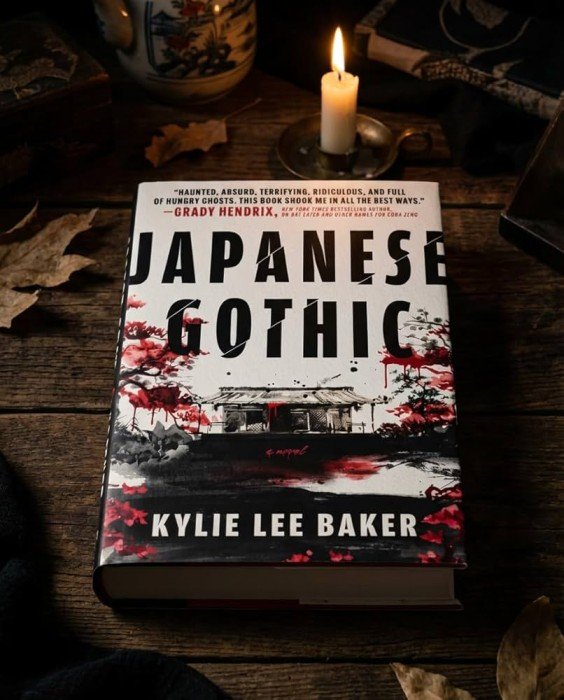
Japanese Gothic is a standalone novel, sitting at around 350 pages. And in this review, I’ll be using what’s called “acorn system,” where I rate five categories: approach, characters, offerings, readability, and narration. Each gets up to 5 acorns, for a total of 25. Then I’ll give a final star rating to sum up the overall experience. Alright let’s get into it.
Approach
So before I started reading, I checked out the official blurb, and honestly… it hooked me immediately.
We’ve got two timelines:
October 2026, Lee Turner wakes up with hazy, violent memories of killing his college roommate. Not knowing what really happened, he escapes to Japan, to his father’s secluded house. But something about that house isn’t right. Animals avoid it. Windows don’t always stay windows. And at night, there’s a woman with a sword outside.
October 1877, Sen, a young samurai in hiding, is living in that same house generations earlier. Her father has returned from war… but something about him feels wrong. Still, she’ll do anything to earn his approval, even the unthinkable.
And then there’s that line:
“One of these people is a ghost, and one of these stories is a lie.”
Yeah… that alone sold me. I love anything tied to Japanese culture, anime, RPGs, all of it. So a story set in Japan across two timelines? I was already in.
The cover also does a great job setting the tone. It’s eerie, a little unsettling, with strong red accents that hint at blood and horror. It gives off the exact vibe you’d expect from a story like this. This was also my first time reading Kylie Lee Baker, but I’d heard good things, especially about Bat Eater and Other Names for Cora Zeng, which is already on my TBR. So yeah, expectations were high… maybe a little too high.
But based on the setup alone? Easy 5 out of 5 acorns for approach.
Characters
The story mainly follows two characters: Lee and Sen.
Lee is isolated, confused, and haunted, both by what he might have done and by his complicated relationship with his family. His connection to death is… strange, but fascinating.
Sen, on the other hand, is being raised as a samurai during a time when samurai are basically being erased. Her father is strict, intense, and obsessed with honor. And through her, we get a deep look at that mindset, especially the idea that a samurai shouldn’t fear death at all.
What’s really interesting is how both characters, despite being from completely different worlds, share similar emotional struggles, especially when it comes to family and mortality. And when their timelines begin to overlap? That’s where things get really good.
Seeing them perceive each other through completely different cultural and historical lenses adds so much depth. It’s not just spooky, it’s thought-provoking. There’s also a third character tied to Japanese mythology, and while I won’t spoil it, if you like folklore, you’ll definitely appreciate that layer.
Overall, the characters felt complex, unpredictable, and genuinely engaging. Nothing felt cliché.
Another easy 5 out of 5 acorns.
Offerings
This is where the book really shines.
You’re getting:
- Dual timelines with strong storytelling on both sides
- Japanese history and samurai culture
- Elements of mythology
- Psychological horror
- A layered mystery that keeps evolving
And the mystery? It’s so well done.
You’re constantly questioning everything:
- What actually happened with Lee?
- Why are these timelines connected?
- What’s wrong with the house?
- Who, or what, is telling the truth?
That one line from the blurb, about the ghost and the lie, sticks with you the entire time. You’re always trying to figure it out. There’s also a subtle emotional connection between characters that isn’t physical or romantic in the usual sense, it’s more spiritual and psychological, which I found really refreshing. All of this combined made the book super engaging.
5 out of 5 acorns for offerings.
Readability
Even though it’s around 350 pages, it reads fast. Chapters are short, pacing is smooth, and the writing is very accessible. I wasn’t rushing through it, and I still finished quicker than expected.
That said, there are a couple of things to keep in mind:
* There’s definitely gore and blood
* Death is a major theme throughout
If you’re sensitive to either of those, this might not be the best pick right now. But outside of that? Very readable.
4 out of 5 acorns.
Narration
This was probably my favorite part. Kylie Lee Baker’s writing style is incredibly immersive. She uses sensory details really well, you don’t just see scenes, you feel them.
The structure is also smart:
- Alternating timelines
- Occasional flexibility when needed
- Divided into clear sections
- Mythological interludes at key points
There’s also a growing sense of confusion—but in a good way. The story keeps layering new information, sometimes contradicting what you thought you knew. It makes everything feel unstable… and that’s exactly the point. By the time you reach the climax, everything clicks in a really satisfying way. Honestly? This could easily be adapted into a movie.
5 out of 5 acorns for narration.
Trust me it’s worth it
Total score: 24 out of 25 acorns
And yeah, this is a 5 out of 5 stars for me.
I had such a great time with this book. And what’s even better? It’s the kind of story that makes you want to reread it just to catch all the details you missed the first time. I’d definitely recommend it, especially if you enjoy mystery, horror, or anything tied to Japanese history and folklore.
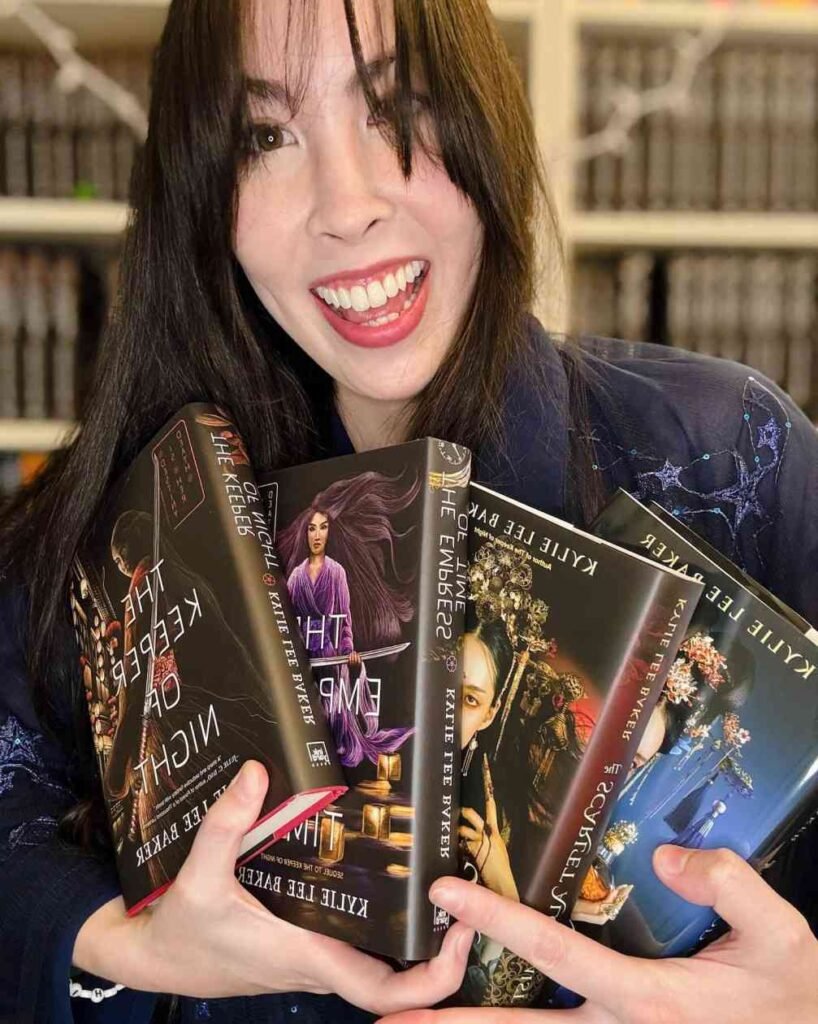
And honestly, if this book sounds even a little interesting to you, I’d definitely recommend checking out some of Kylie Lee Baker’s other work as well. I know I’m personally excited to dive into more of her books after this.